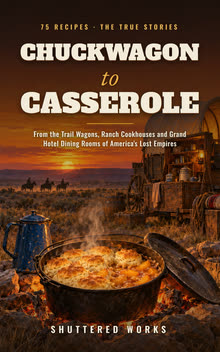
75 recipes from the trail wagons, ranch cookhouses and grand hotel dining rooms of America’s lost empires
Cook the food of the places in the videos. Every recipe is written out for a modern kitchen, a cast-iron skillet or a Dutch oven over coals, and comes with the short true story behind the dish, to tell at the table.
Every one of those stories had a kitchen in it. The chuckwagon at the end of a long day on the drive. The ranch cookhouse and its dinner bell. The grand hotel dining room in its best season. The dime-store lunch counter, and the Tupperware party in somebody’s living room.
A video can show you those places. It can’t hand you the plate. This book does: the biscuits, beans and vinegar pie of the cow camps, the dishes the resort towns were known for, the casseroles of the Pyrex years, and where each one really came from. Where a famous origin story is only a legend, the book says so, and tells you what the record shows.
Old recipes are put into today’s cups, ounces and oven temperatures. Each one was worked out against established published recipes for the same dish, and the Dutch-oven dishes come with charcoal counts and a home-oven method.
Every recipe has its true story, a modern ingredient list, numbered steps, and notes where the old way and the new way differ. Tap a chapter to see its recipes.
In 1887 The White House Cook Book told its readers how to know when the oven was ready for pastry. You opened the door, put your hand inside, and counted.
On June 15, 1845, Joel Palmer's company sat in camp on the North Platte and did not move. At daylight a herd of buffalo had come down to cross the river, caught the scent of the wagons and turned back.
In the spring of 1866, near Fort Belknap on the Texas frontier, Charles Goodnight and Oliver Loving put together a herd to drive southwest to the Pecos River and on into New Mexico. (The drive, and how it ended, is the tale in Chapter 8.) The Texas State Historical Association's record adds one detail that belongs here: for that drive, Goodnight "assembled and utilized the first chuckwagon."
In 1885 a San Antonio newspaper columnist named Alexander Sweet described Military Plaza for his readers: "an array of tables and benches," the smell of something cooking, and at the fire, pots and kettles with women gathered around them. "These are the chile con carne stands," he wrote.
In the spring of 1893 two hotels set the pattern for every grand dining room that came after them. In March the Waldorf opened at Fifth Avenue and 33rd Street in New York, on the lot where William Waldorf Astor's mansion had stood.
In 1928 the Woolworth's in Butte, Montana, opened a lunch counter with 62 stools. The company sent a woman manager up from its Denver store to run the opening, and the store said it expected to serve 1,000 people at lunch.
In the spring of 2005 the Texas Legislature spent part of its session on the cook's side of the campfire. On March 30 the Senate voted to make the chuck wagon the official vehicle of Texas.
On a Saturday in October 1855, thousands of Bostonians walked through Harvey Parker's new hotel on School Street before it had served a single guest. The Boston Transcript announced the opening on Monday, October 8.
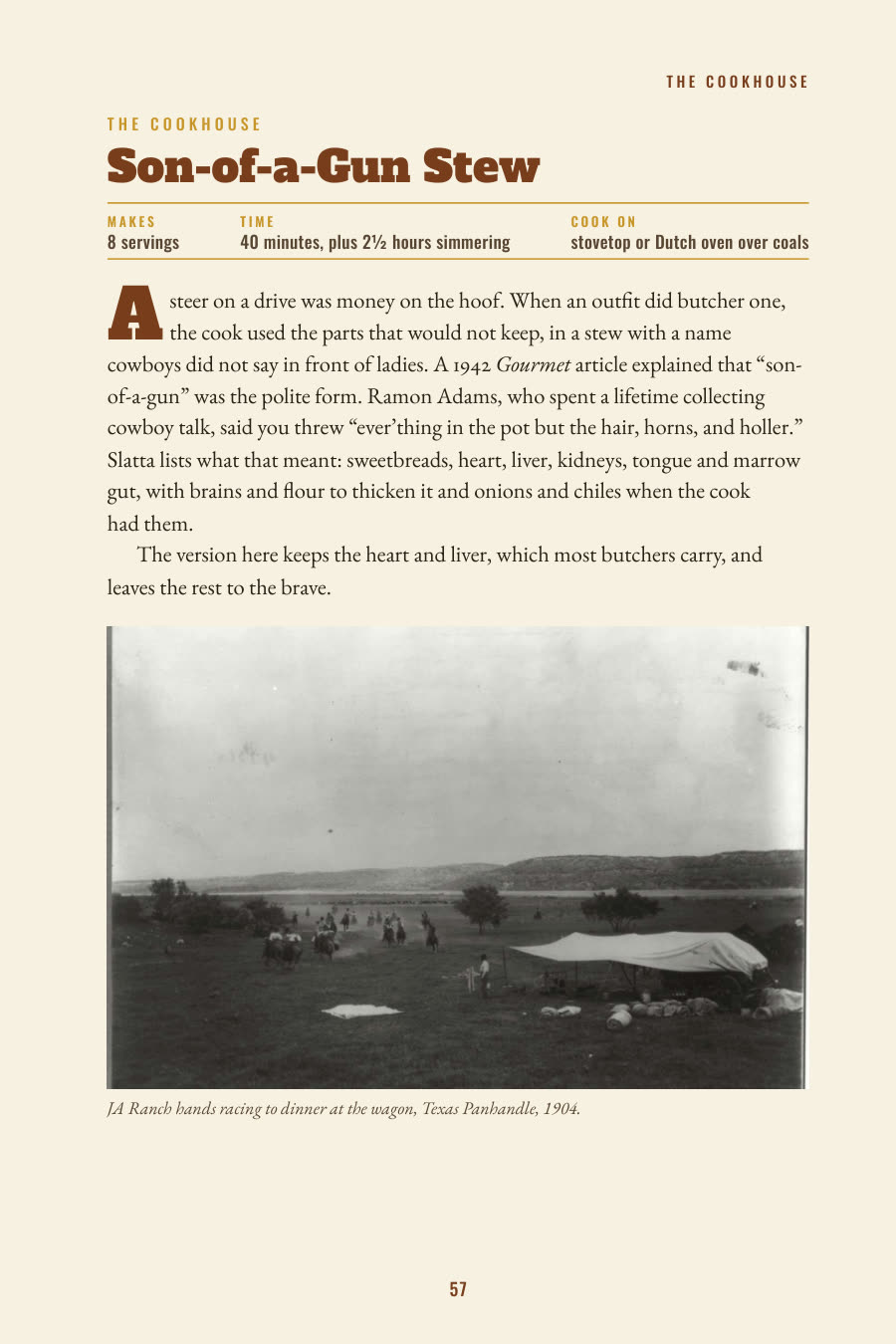
Here is one whole recipe page, as it is in the book: Son-of-a-Gun Stew, from the ranch cookhouse chapter.
More real pages from the book. Tap one to see it full size.
Gumroad delivers the PDF the moment you pay, on the page and by email. Open it on a phone, a tablet or a computer, or send it to the Kindle app. Print the recipe cards on card stock, or whole recipe pages, for your own kitchen.
A PDF ebook of 275 pages, laid out like a printed cookbook at 6 × 9 inches. It reads on any phone, tablet or computer, and in the Kindle app.
Yes, for your own kitchen. The recipe cards are framed to cut out, and every recipe page prints cleanly too.
Because each dish here is tied to a real place from the videos, with the true story behind it and the legends sorted from the record. Old trail and cookhouse recipes are put into modern measures, the Dutch-oven dishes come with coal counts and an oven method, and it’s all in one book you can cook straight through. Take the Waldorf salad: the book gives Oscar Tschirky’s own 1896 recipe (apples, celery, mayonnaise, nothing else), the story of the hotel that made it famous, and how it turned into the version with walnuts and grapes most people make now.
The food. The videos tell how the ranches, trails and resort towns rose and fell; this book puts their cooking on your table, with stories the videos don’t have time for.
No. Most recipes are made in an ordinary kitchen. The fire chapter gives a home-oven or stovetop method alongside the coals.
Shuttered Works, the YouTube channel about America’s rise-and-fall stories: the ranch empires, the Oregon Trail, the resort towns and the companies that built them.
Click “Get the book”, pay through Gumroad’s secure checkout, and the download appears straight away. Gumroad also emails you the link, so you can download it again later.
Secure checkout by Gumroad. Your download link is also emailed to you.
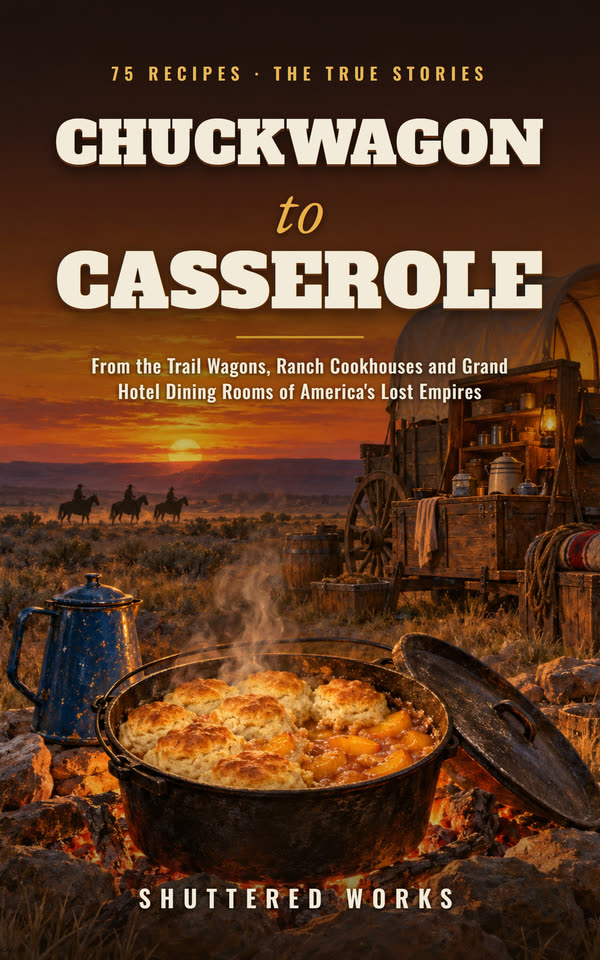
The food of the places in the videos, with the true story behind every dish.